











Oral Health

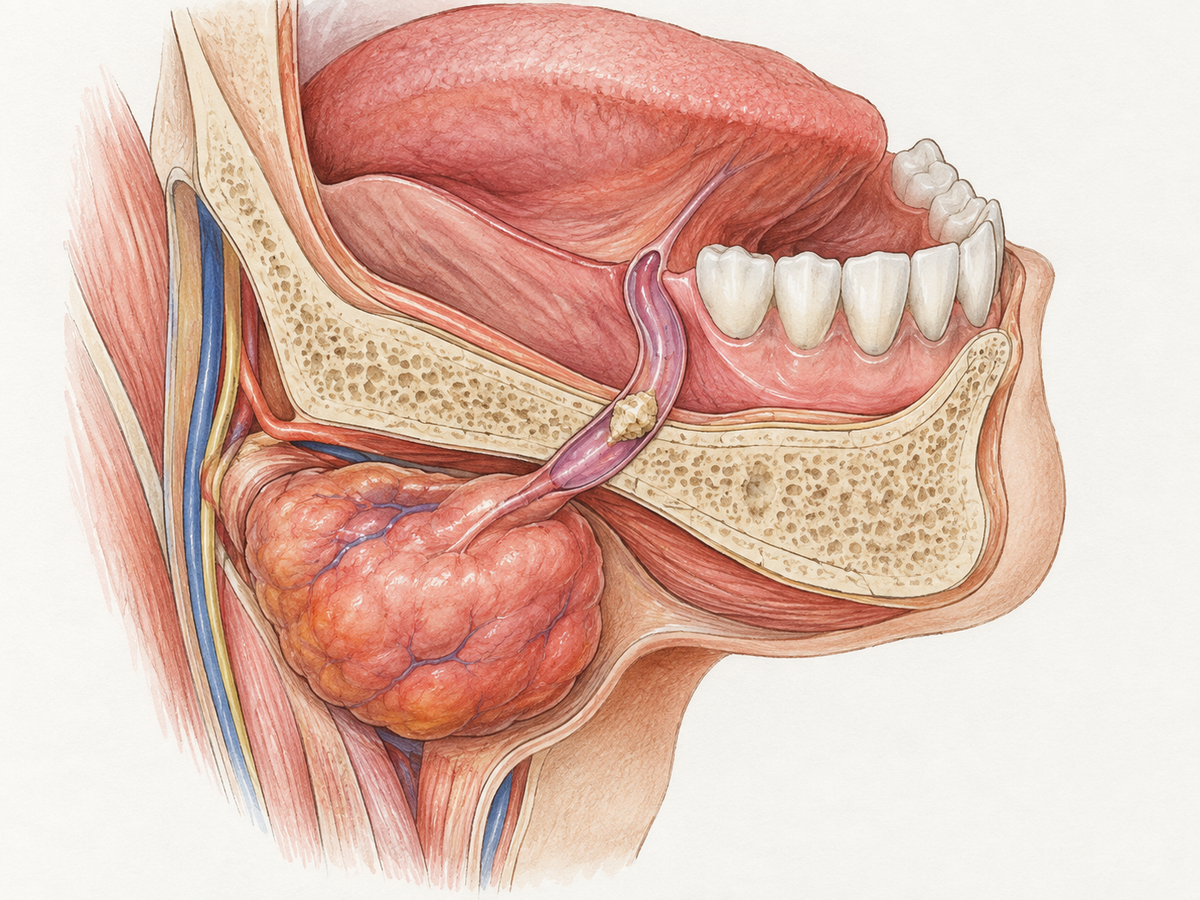
A cross-section of the lower jaw and floor of the mouth shows a submandibular gland and Wharton's duct, with a small salivary stone blocking the duct and backed-up saliva swelling the gland.
Oral Care

Why Is the Gland Under Your Jaw Swollen?

A swollen gland under your jaw is usually caused by a salivary stone or infection; this article covers causes, red flags, diagnosis, and treatment options.
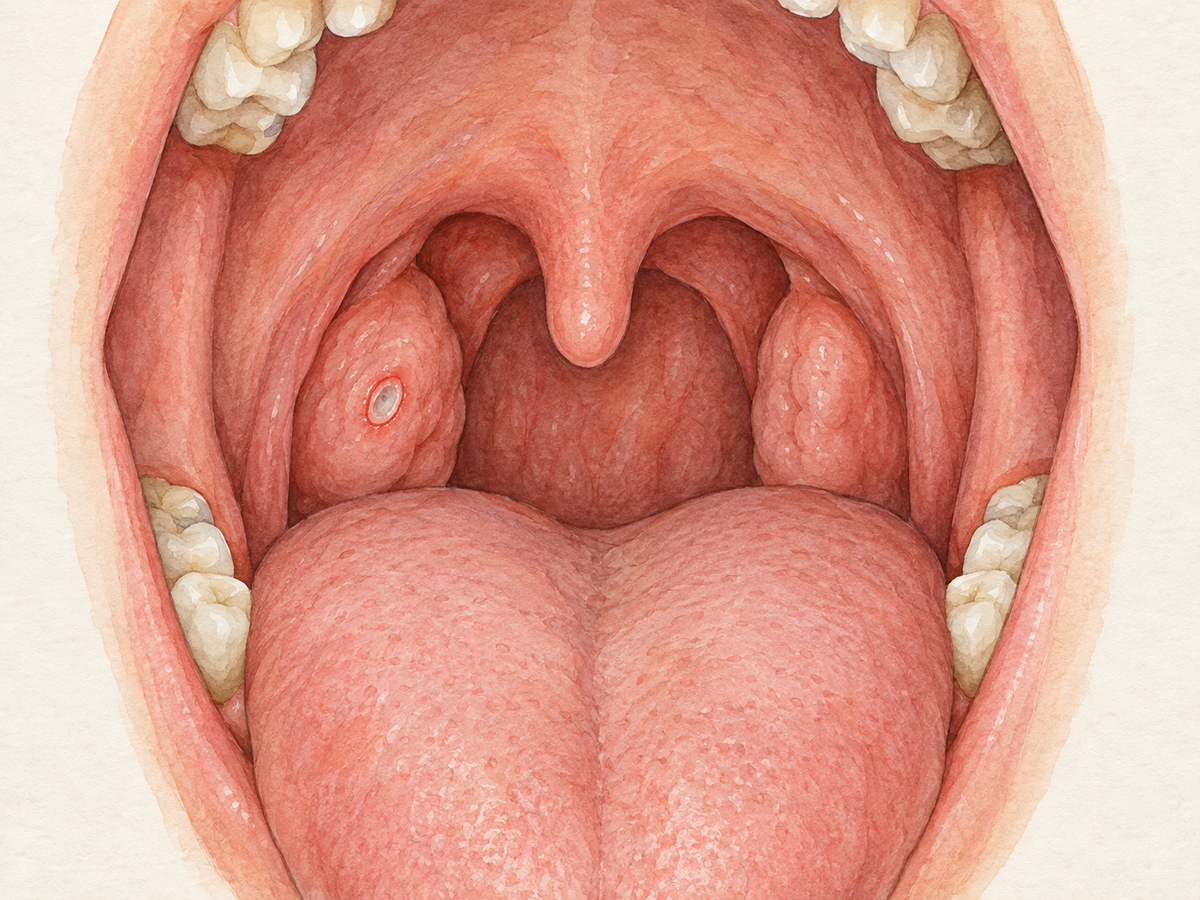
Oral CareA frontal anatomical view into the open mouth and throat highlights a small canker sore on one tonsil, shown as a round white-gray ulcer with a red rim, while nearby tissues remain normal.

Canker Sore on Tonsil: How to Deal

A canker sore on your tonsil usually heals within 1 to 2 weeks. Learn home relief, how it differs from strep throat, and when to see a doctor.
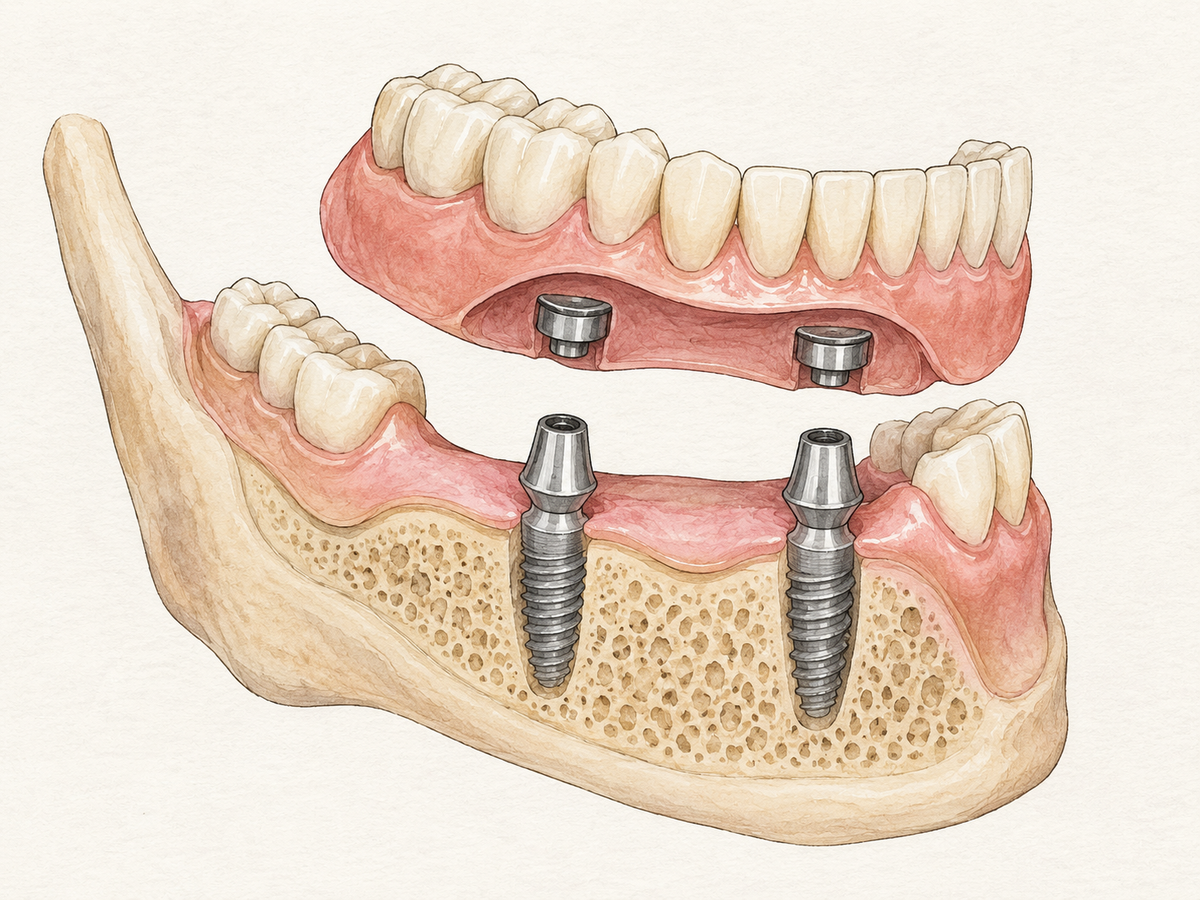
Oral CareA cross-section of a lower jaw shows two dental implants anchored in bone and emerging through healthy gums, with a removable denture above and its internal clips aligned to snap onto the implants.

Snap-On Dentures: Pros, Cons, and Realistic Expectations

Snap-on dentures clip onto implants for better stability, but this article explains costs, upkeep, risks, and who qualifies before committing.
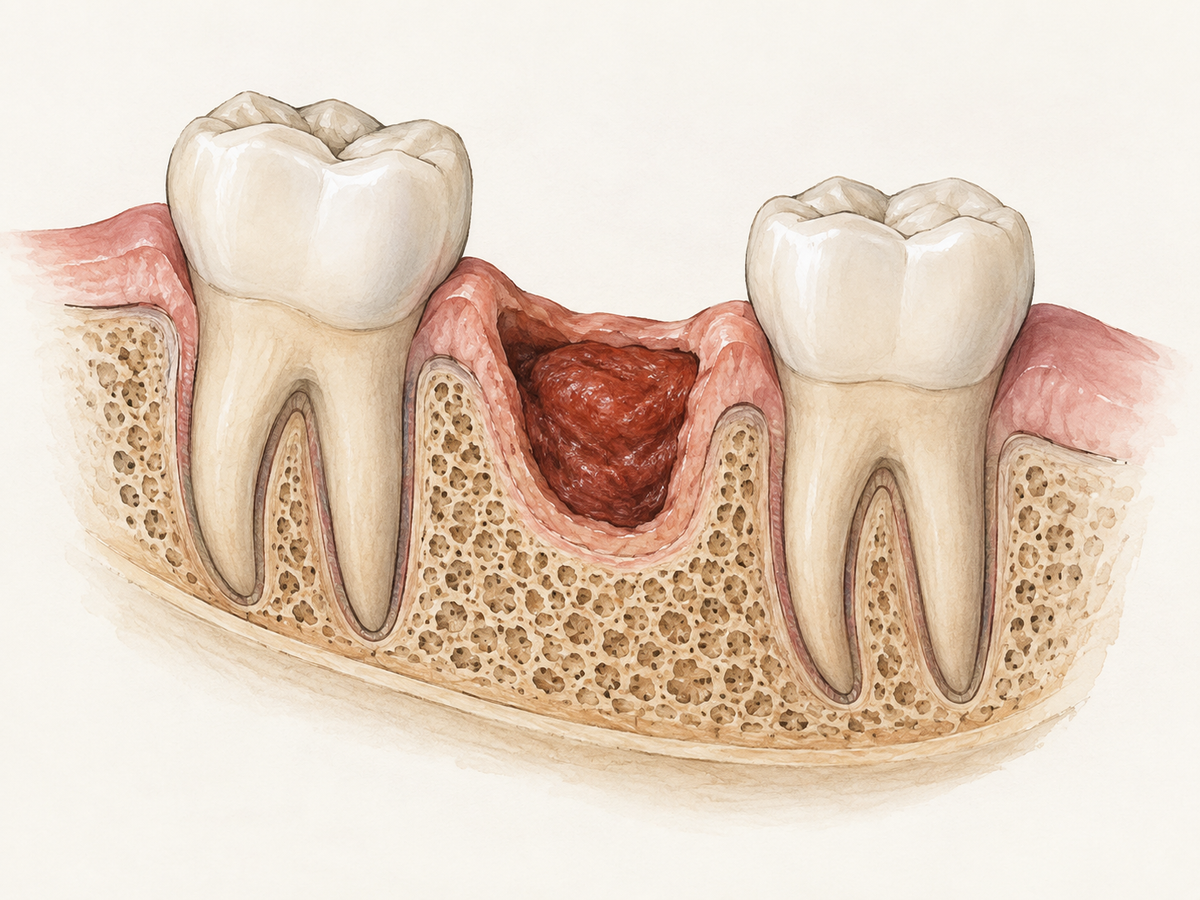
Oral CareA cross-section of the jaw shows an empty tooth socket sealed by a protective blood clot, with healthy pink gums, alveolar bone, and neighboring teeth, illustrating the extraction site during early healing.

Tooth Extraction: What to Expect and How to Heal Well

Learn what tooth extraction involves, from simple and surgical procedures to aftercare that protects the blood clot, eases pain, and lowers dry socket risk.
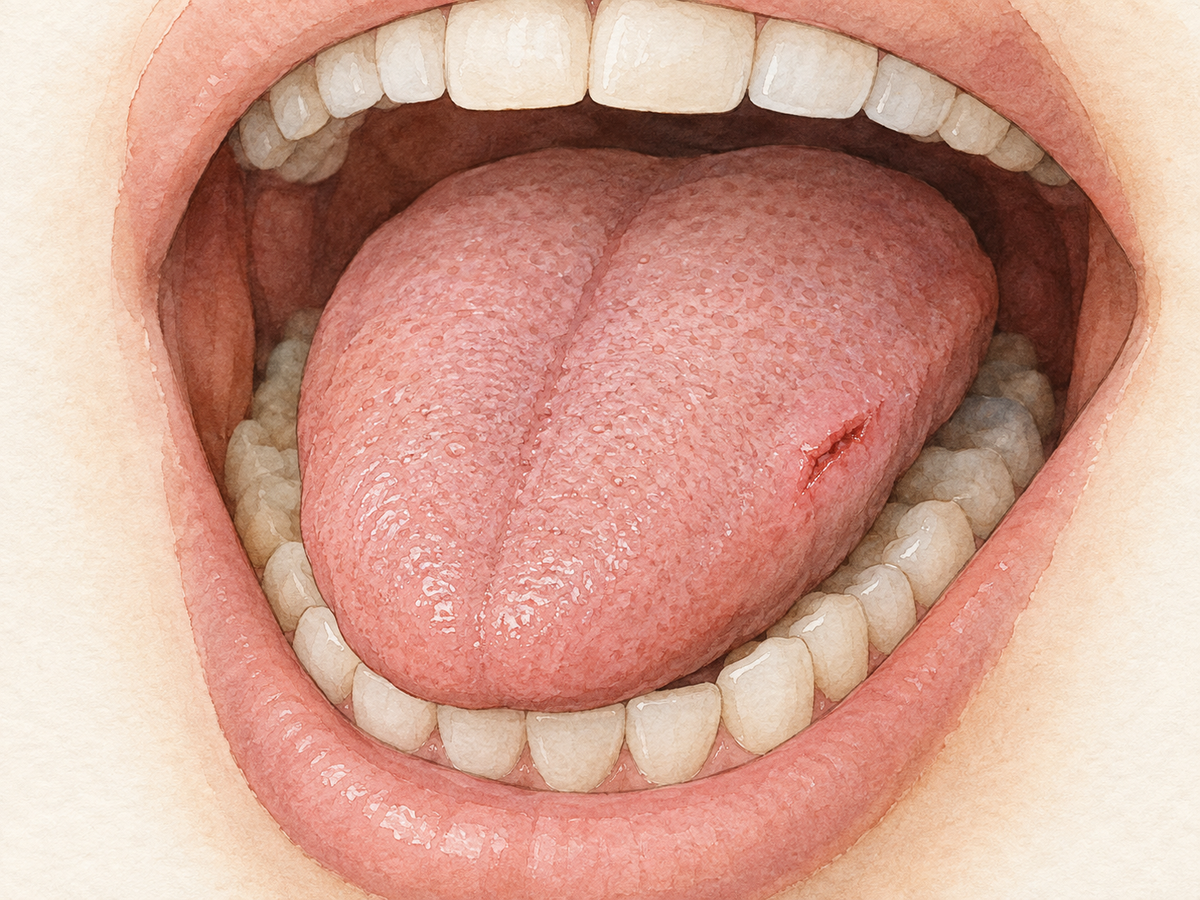
Oral CareA close view inside a softly opened mouth shows the tongue resting between the upper and lower teeth, with a small shallow bite wound along the side of the tongue, indicating where tongue bites occur and how they look during healing.

Bit Your Tongue? Here’s What to Do Now

Learn how to treat a minor tongue bite at home, spot signs that need medical care, and prevent repeat bites with simple eating and dental tips.
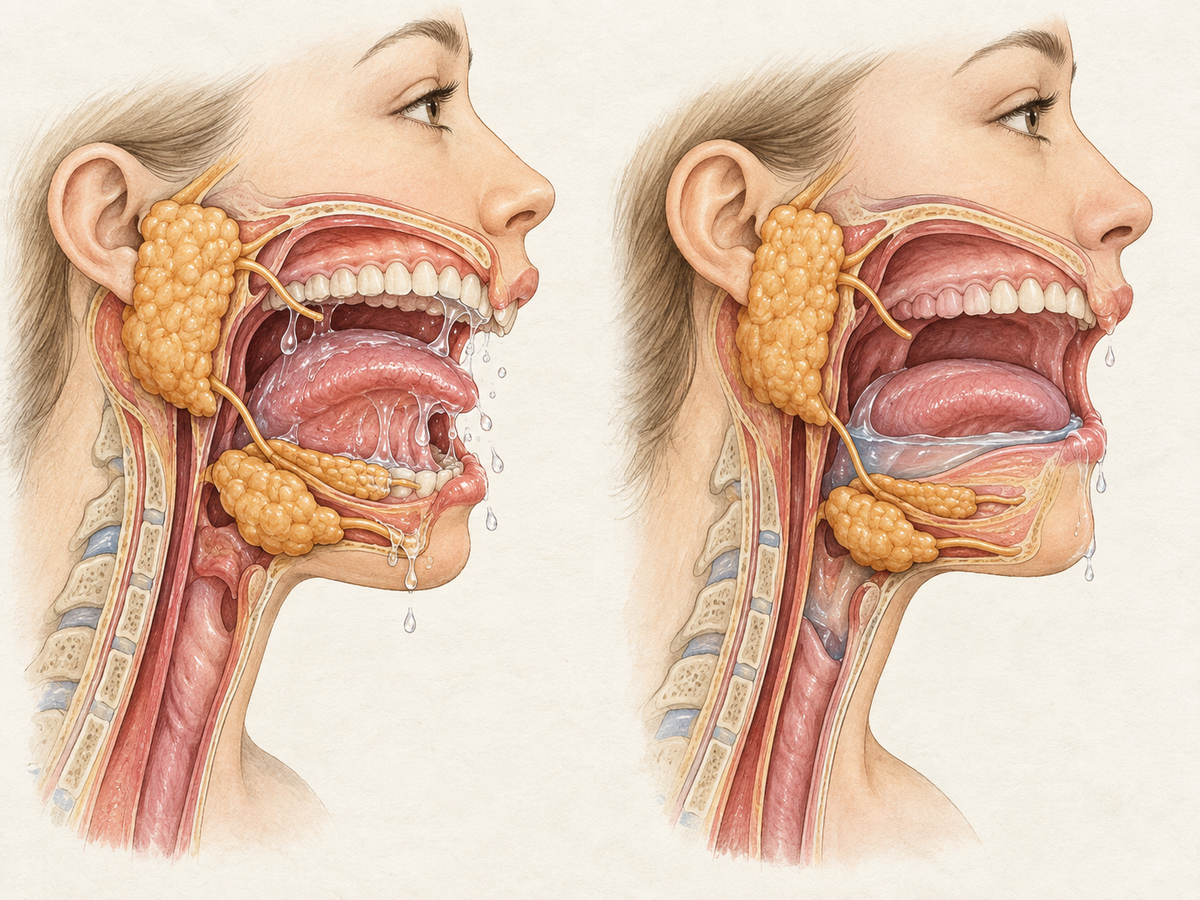
Oral CareA side-by-side anatomical cross-section of the mouth and throat compares two causes of excessive saliva: overactive salivary glands releasing excess saliva, and saliva pooling because swallowing muscles are weak.

Excessive Saliva: Why It Happens and What Can Help

Excessive saliva often comes from overproduction or swallowing problems; this article explains causes, at-home tips, treatments, and emergency signs.
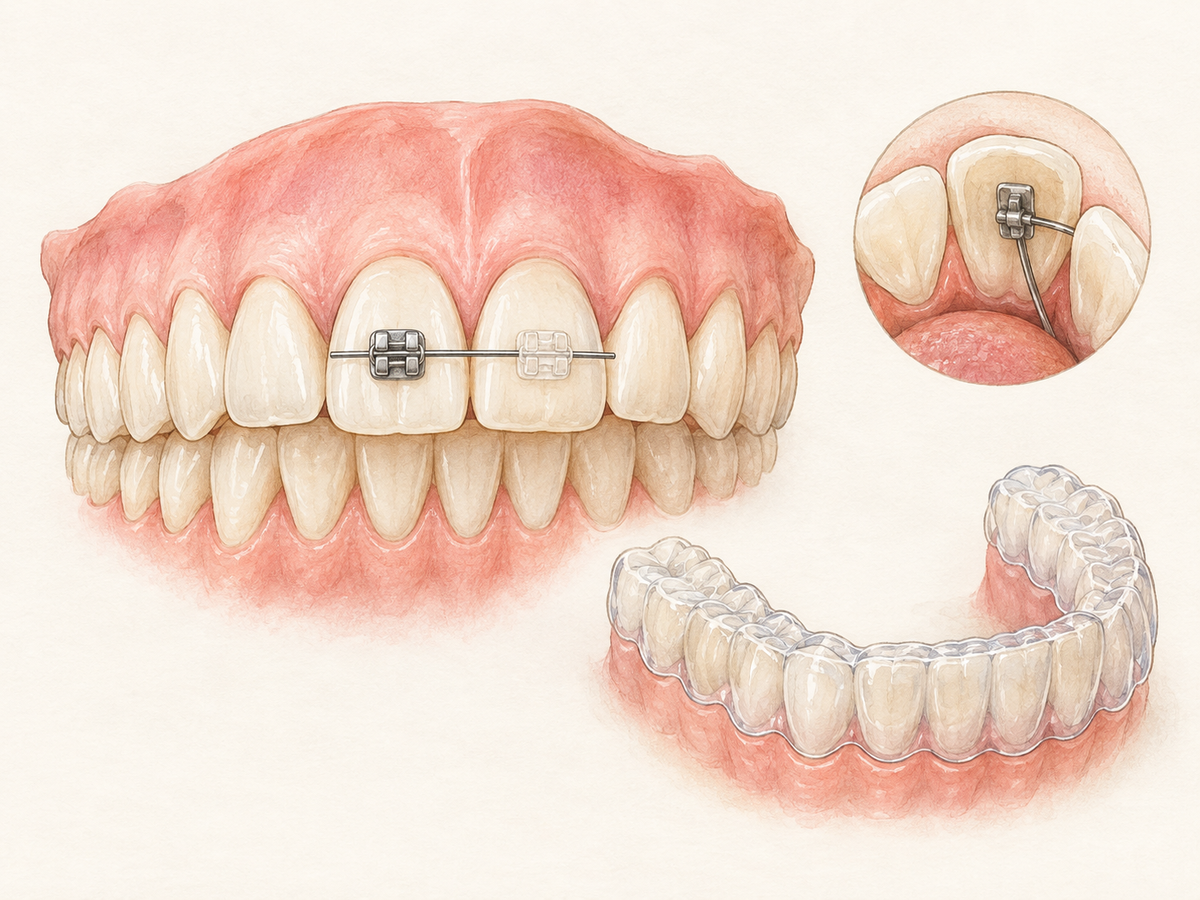
Oral CareA dental arch comparing orthodontic options: a metal bracket and archwire on one front tooth, a tooth-colored ceramic bracket beside it, a clear aligner tray over lower teeth, and a hidden lingual bracket behind a tooth.

Types of Braces: Which One Is Right for You?

Compare metal, ceramic, lingual, self-ligating braces and clear aligners by bite complexity, cost, visibility, and wear habits to choose a suitable option.