









Oral Health

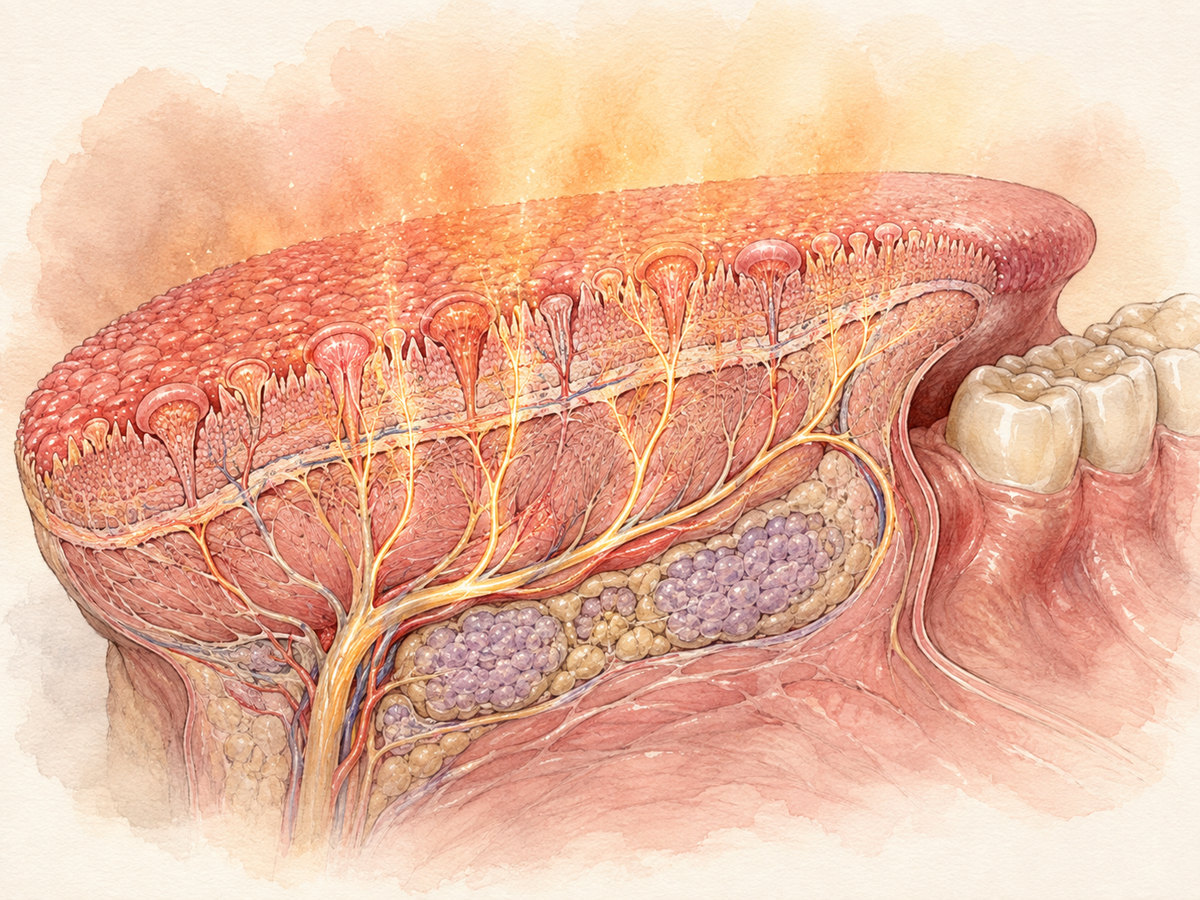
Cross-section of a human tongue and oral lining shows intact pink tissue and delicate sensory nerves highlighted with a soft warm glow, representing the burning or tingling of burning mouth syndrome without any visible sore.
Oral Care

Medicines and Burning Mouth: Causes and Treatment Options

Some blood pressure drugs, antidepressants, and hormones may trigger burning mouth; this covers diagnosis, treatment options, and when to seek follow-up.
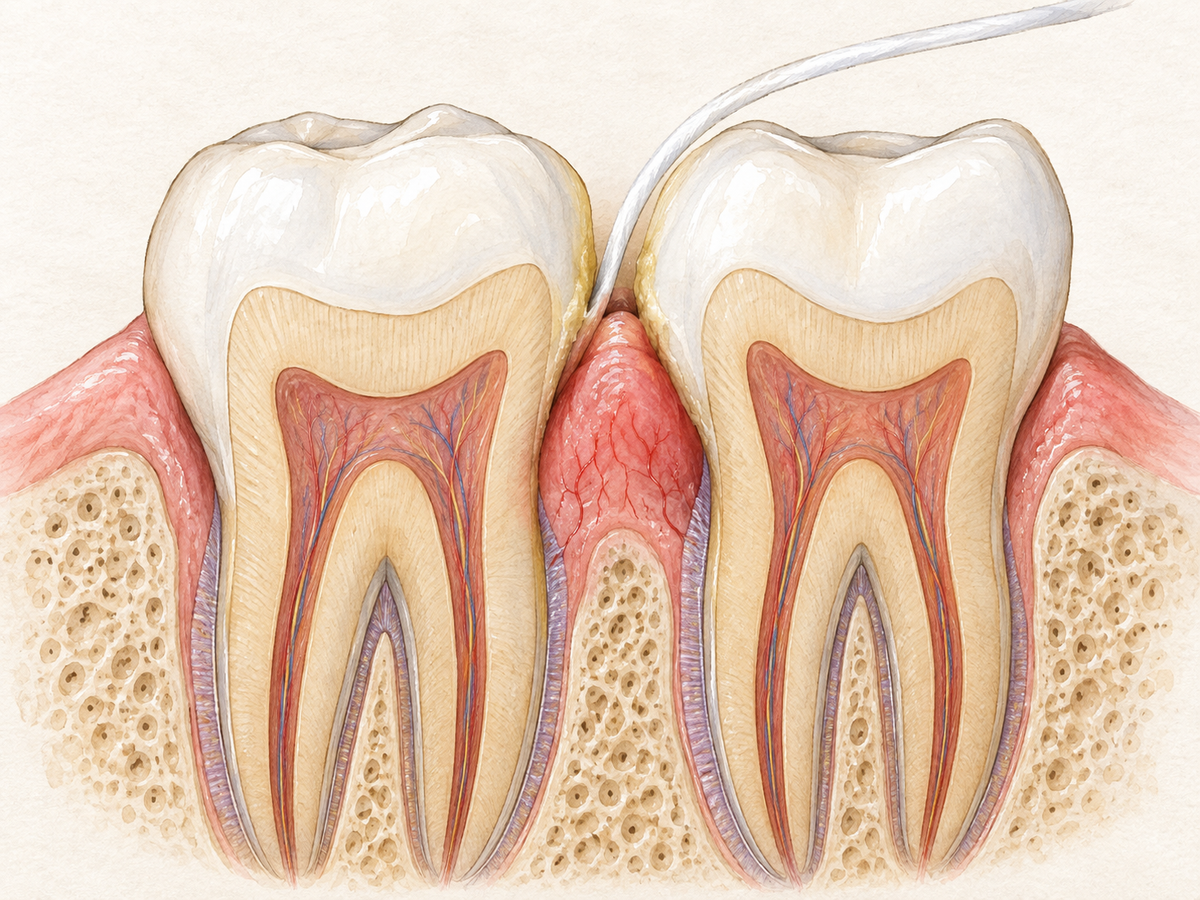
Oral CareA cross-section of two teeth and gum tissue shows dental plaque along the gumline and a strand of floss gently entering the sulcus; inflamed gum tissue contains fragile capillaries, explaining why gums may bleed when flossing.

Why Your Gums Bleed When Flossing

Gums bleeding when flossing usually means plaque buildup and inflamed gums, not harm from floss. Learn causes, when to see a dentist, and how to floss gently.
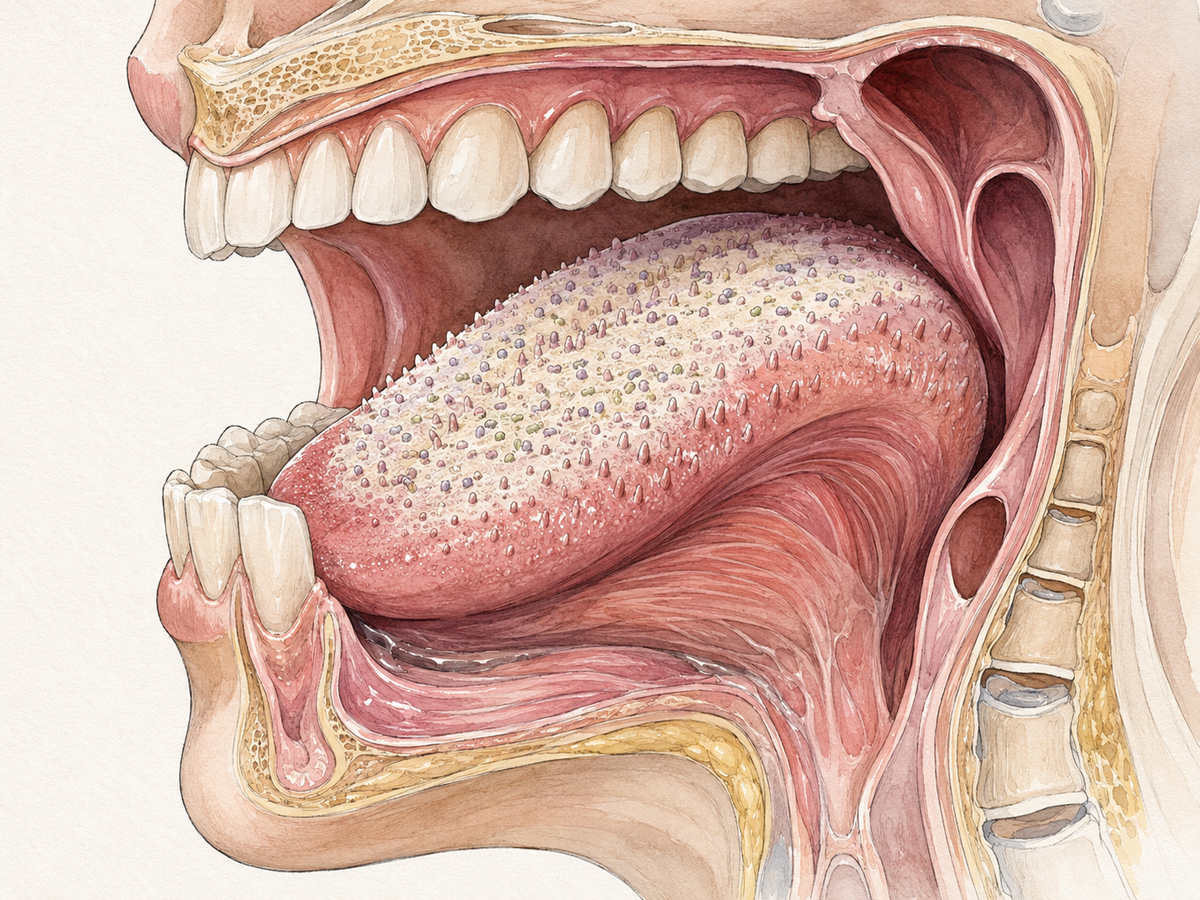
Oral CareCross-section of the mouth showing the top surface of the tongue covered by a pale bacterial coating among the papillae, with healthy ivory teeth and pink gums nearby, highlighting the tongue as the main source of bad breath.

Why You May Not Always Smell Your Own Bad Breath

You often can't smell your own bad breath due to olfactory adaptation. Learn reliable home checks, signs others notice, and when halitosis needs a dentist.
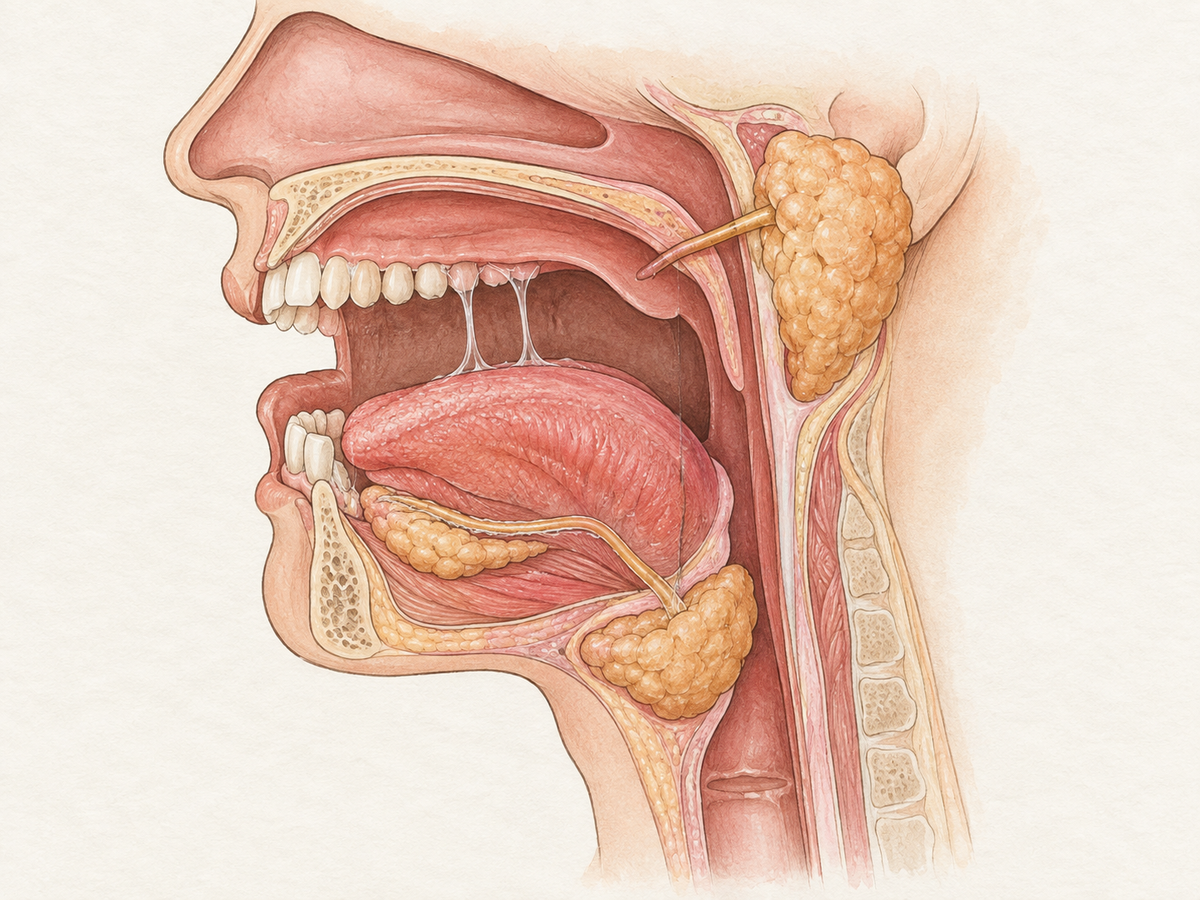
Oral CareCross-section of the mouth showing teeth, tongue, gums, and salivary glands, with thickened, stringy saliva bridging the tongue and palate to illustrate sticky saliva or dry mouth.

4 Causes of Sticky Saliva and How to Relieve It

Sticky saliva is often caused by dehydration, medications, mouth breathing, smoking, or dry air; find home remedies and when to see a dentist or doctor.
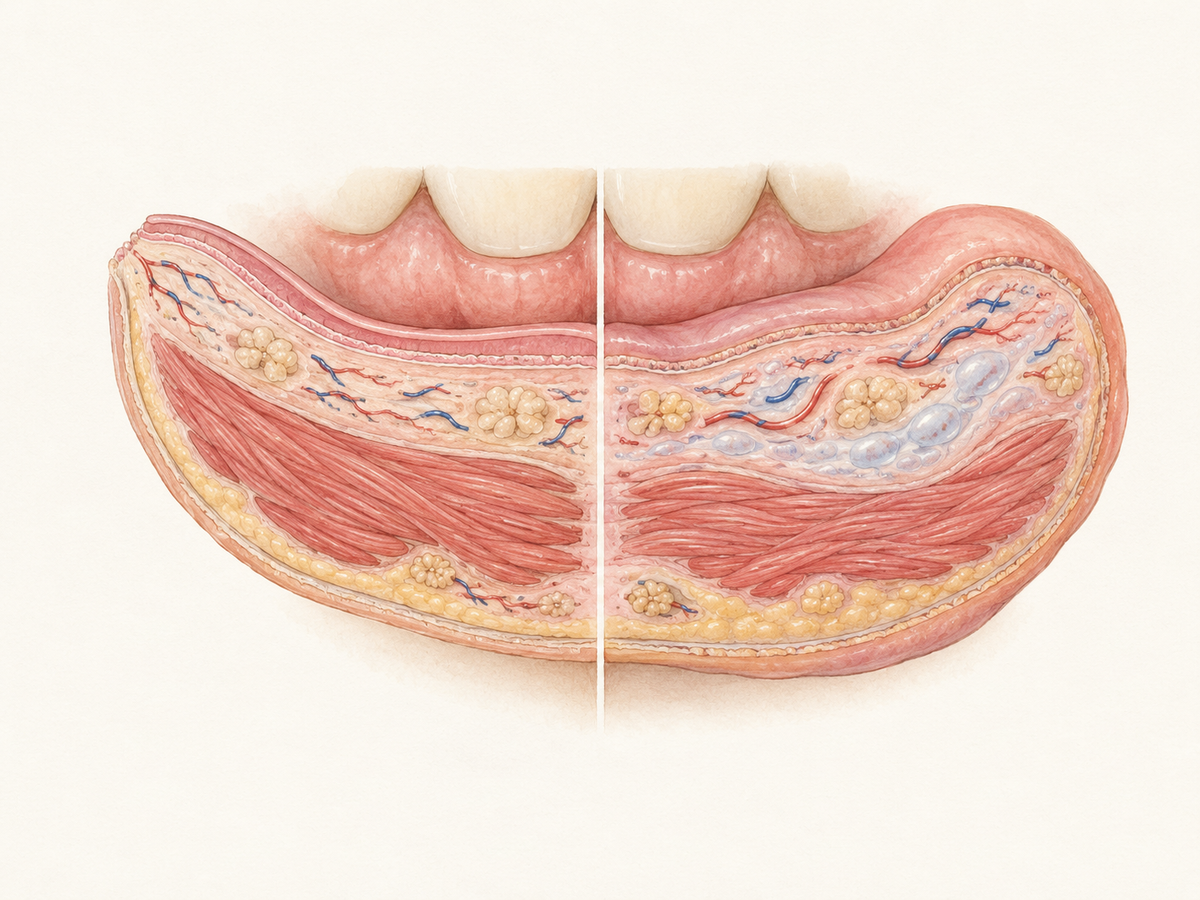
Oral CareA cross-section of the human lip compares normal tissue with a mildly swollen lip, showing thin outer skin, small blood vessels, and loose underlying tissue where fluid collects and causes puffiness.

Swollen Lip: Causes, Relief, and When to Get Help

A swollen lip often stems from allergies, infection, trauma, or irritation; here’s how to relieve mild swelling, spot emergencies, and when to seek care.
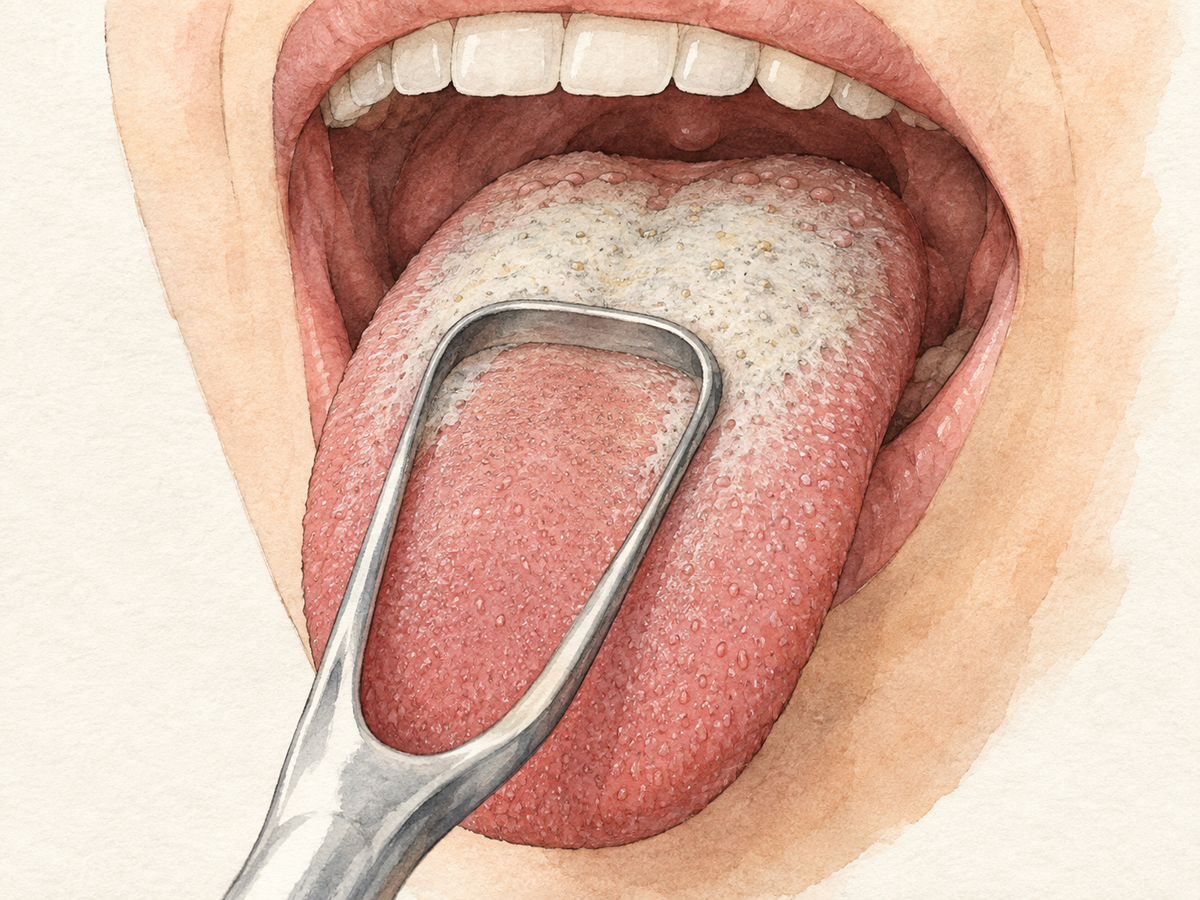
Oral CareA tongue scraper gliding from the back of an extended tongue toward the front, lifting a pale coating of debris and odor-causing bacteria and leaving a clean pink surface, illustrating how tongue cleaning reduces bad breath.

How to Clean Your Tongue and Avoid Bad Breath

Clean your tongue from back to front once or twice daily with a scraper or soft brush to reduce bad breath, and learn when to see a dentist.

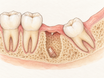
Oral CareA cross-section of a lower jaw after wisdom tooth removal shows the protective blood clot in the extraction socket, with healthy gums, adjacent molars, and a bowl of smooth puree and water nearby, representing recommended soft foods during healing.

What to Eat After Wisdom Teeth Removal

After wisdom teeth removal, eat cool, soft foods for 24–48 hours, then add gentle-chew foods while avoiding hot, crunchy, sticky items to protect the clot.