
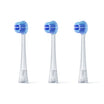
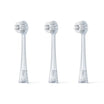
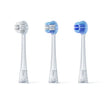
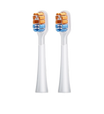


Choosing a sustainable electric toothbrush means looking beyond natural-looking materials and recyclable packaging. The more useful questions are how long you can keep the handle, what happens to replacement heads, and whether support remains available when something stops working.
This guide compares four products with different strengths: SURI Pro 2.0, etee’s bamboo-head electric toothbrush, Philips One Battery, and RANVOO AirJet X5.
Research checked October 15, 2026. Prices are in USD, before taxes and shipping. Ratings are research-based editorial judgments—not customer ratings or hands-on test results. No comparable lifecycle assessment was verified for all four products, so this ranking does not establish which has the lowest environmental footprint.
TL;DR
SURI Pro 2.0 is our top recommendation for buyers who need a new electric toothbrush, combining pressure feedback with a brush-head return program where that service is available.
Why choose a sustainable electric toothbrush?
An electric toothbrush has two different replacement cycles: the brush head wears out regularly, while the handle should remain useful for much longer. A thoughtful purchase considers both.
Head materials matter because they create recurring waste. Battery access and service policies matter because a failed component can make an otherwise functional handle unusable. Packaging is relevant, but it cannot answer these larger ownership questions.
For this guide, sustainability means making it practical to maintain effective oral care while avoiding unnecessary replacement. That includes choosing a brush you can afford to refill, understanding its disposal instructions, and checking what support exists after the warranty expires.
It also means recognizing when a purchase is unnecessary. If your current toothbrush works well and compatible heads remain available, continuing to use it is a sensible starting point.
Electric brushing itself is optional. The American Dental Association states that both manual and powered toothbrushes can clean effectively. The right format is one that helps you brush consistently and thoroughly. Source: ADA toothbrush guidance
How we selected these toothbrushes
We assessed the products against five priorities:
| Priority | What we examined | Why it matters |
|---|---|---|
| Handle longevity | Battery access, warranty, and service arrangements | A worn battery or failed component should have a clear next step |
| Replacement-head waste | Materials and disposal instructions | Heads create a recurring waste stream |
| Practical recovery | Take-back programs and accessible processing routes | “Recyclable” only helps when suitable collection exists |
| Brushing support | Timing, pressure feedback, and manageable operation | Environmental features must fit an effective daily routine |
| Ownership cost | Purchase price, refills, batteries, and servicing | A brush should remain affordable to maintain |
We gave more weight to specific ownership arrangements than broad environmental language. A documented return program is more useful than an unexplained recycling symbol.
We also separated convenience from environmental performance. Long battery runtime can make travel easier, but it does not establish lower energy consumption. A waterproof rating describes water resistance, not guaranteed service life.
The scores reflect each product’s overall suitability for this guide. Missing evidence limits our confidence rather than being treated as proof that a product is either sustainable or unsustainable.
Quick Comparison
| Product | Price | Rating* | Best for | Why |
|---|---|---|---|---|
| SURI Pro 2.0 | $105 brush only; $135 with UV case | 4.2/5 | Best overall balance | Pressure feedback and a manufacturer brush-head return program |
| etee Electric Toothbrush with Replaceable Bamboo Head | $90 sale price, including three heads | 3.7/5 | Buyers prioritizing bamboo replacement heads | Separable bamboo components, with disposal work required |
| Philips One by Sonicare — Battery, HY1100/02 | $29.96 | 3.5/5 | Budget buyers prioritizing battery replacement | Replaceable AAA power lets owners retain the handle when the battery runs out |
| RANVOO AirJet X5 | $149.99 one-time purchase | 3.3/5 | Buyers prioritizing time between charges | Rechargeable operation and replaceable heads; repairability and recovery remain unverified |
Editorial ratings under this guide’s sustainability-focused criteria. Philips One and RANVOO are conditional alternatives based on specific ownership benefits, rather than comprehensive environmental credentials.
Full Reviews (One by One)
1. SURI Pro 2.0 — Best Overall Balance
Editorial rating: 4.2/5
Price: $105 brush only; $135 with UV clean-and-charge case

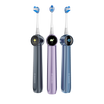
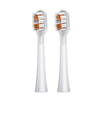
Image: SURI.
Why we selected it
SURI Pro 2.0 earns our top position because it combines useful brushing guidance with a defined route for returning used heads. Its pressure sensor is a practical reason to consider it: feedback during brushing can help users recognize excessive force. For this guide, that is more valuable than adding features with little connection to everyday technique.
The environmental appeal depends on participation. A return program only works when owners collect and send back their heads, and when the service is available where they live. We would therefore choose SURI most confidently for someone who will actually use that route. Buying a plant-based head does not, by itself, complete its disposal journey.
There is also a distinction between a recoverable design and a guaranteed repair service. SURI’s current support information describes replacing faulty brushes and recovering components from returned units. It does not promise that your original handle will always be repaired and returned. Buyers expecting lifetime repairs should adjust those expectations.
Our preferred purchase is the brush-only configuration unless the case solves a real travel need. A sustainability-focused purchase should start with equipment you will use regularly. Overall, SURI offers the strongest balance here for someone replacing a worn-out brush, particularly where its collection service is accessible. It is still worth checking refill costs and service terms before committing, and it is not a reason to retire a functioning toothbrush.
Pros & Cons
| Pros | Cons |
|---|---|
| Pressure feedback and quadrant timing | Battery is not user-replaceable |
| Brush-head mail-back program | Free recycling is advertised for the UK and US |
| Brush-only configuration available | Current service policy emphasizes replacement and recovery |
| Straightforward feature set | Higher upfront cost; verify stock |
Key Specs
| Specification | Details |
|---|---|
| Cleaning modes | Clean and Polish |
| Timer | Two minutes with quadrant guidance |
| Pressure sensor | Touchsense |
| Claimed battery life | Up to 34 days |
| Handle | Aluminum; IPX7 rating |
| Head materials | Cornstarch-derived head; castor-oil-derived bristles |
| Battery replacement | Not available to users |
| Warranty | One year; eligible SURI 2.0 purchases can be registered for two years |
2. etee Electric Toothbrush — Best for Bamboo Replacement Heads
Editorial rating: 3.7/5
Price: $90 sale price, including one handle and three bamboo heads

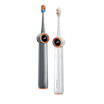
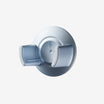
Image: etee.
Why we selected it
The etee electric toothbrush belongs on this shortlist for buyers who want to change the material used in their recurring brush-head purchases. Its bamboo head makes that choice tangible, while the rechargeable handle offers a familiar electric-brushing format. We see it as a targeted option for someone willing to manage the head’s separate components after use.
That willingness matters more than the product’s natural appearance. The most useful information on etee’s page is its disposal guidance: remove the bristles, separate the insert, and deal with each material appropriately. This is a more demanding routine than dropping an intact head into a collection envelope. Before buying, decide whether you would realistically perform those steps every time.
We would also read the broad environmental claims cautiously. The page’s compostability language is not fully consistent with its instructions to discard the bristles and commercially compost the insert. Our recommendation therefore rests on the separable bamboo portion, not an assumption that the complete head disappears harmlessly in a home compost bin.
The remaining purchasing question is long-term support. Ask about replacement heads, battery service, and what happens after the warranty expires. For us, those answers carry more weight than a longer list of cleaning modes. Choose etee if bamboo heads match your priorities and you accept the extra disposal effort; choose another option if you need simpler recovery arrangements or clearly documented pressure feedback.
Pros & Cons
| Pros | Cons |
|---|---|
| Replaceable bamboo heads | Complete heads should not be assumed home-compostable |
| Three heads included | Disposal requires separating components |
| Rechargeable handle | User battery replacement was not verified |
| Multiple brushing settings | Pressure sensor not confirmed in reviewed specifications |
Key Specs
| Specification | Details |
|---|---|
| Settings | Clean, Whiten, Polish, Milder, Sensitive |
| Included heads | Three |
| Power | Rechargeable; charger and USB power adapter listed |
| Claimed runtime | Approximately one month; page also mentions six weeks |
| Head disposal | Bristles to trash; separated bamboo to home compost; insert to commercial compost where accepted |
| Warranty | One year |
| Pressure sensor / built-in timer | Not confirmed in reviewed specifications |
3. Philips One by Sonicare Battery — Best Budget Alternative
Editorial rating: 3.5/5
Price: $29.96 for model HY1100/02

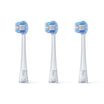
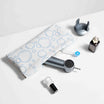
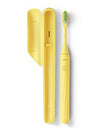
Image: Philips.
Why we selected it
Philips One Battery earns a place here for a narrow but useful reason: its AAA battery can be replaced. When the battery is depleted, the owner can change it and keep using the handle. For buyers concerned about sealed batteries ending a product’s useful life, that is a straightforward ownership advantage. Philips provides battery replacement guidance through its support pages.
Its low purchase price also makes it worth considering when premium environmental positioning would stretch the budget. We would rather see someone choose a brush they can afford to maintain than overspend initially and postpone necessary replacement heads later. Ownership cost should include those heads and the ongoing battery supply.
However, this is a conditional recommendation. Replaceable power does not establish a lower total environmental footprint, and disposable batteries create their own waste. We would not describe the Philips One as a zero-waste brush or assume it outperforms rechargeable alternatives environmentally. Its strongest case is keeping a simple, affordable handle in service.
It is also important to buy with appropriate expectations. Philips presents the One as a manual-style brush assisted by microvibrations. That makes technique and coverage central to the experience; the brand name alone should not lead shoppers to expect the same operation as other Sonicare ranges. Choose it for accessible battery replacement and everyday simplicity, especially if those qualities will help you keep using the same handle for years.
Pros & Cons
| Pros | Cons |
|---|---|
| Replaceable AAA battery | Ongoing disposable-battery waste |
| Lowest purchase price here | No product-specific head take-back program verified in this review |
| Timing and quadrant prompts | Basic assisted-brushing format |
| Compact travel case included | Dedicated Philips One heads required |
Key Specs
| Specification | Details |
|---|---|
| Reviewed model | HY1100/02, Battery version |
| Brushing action | 13,000 microvibrations per minute |
| Power | One AAA alkaline battery |
| Claimed runtime | Up to 90 days |
| Timing | Two-minute prompt; 30-second pacing |
| Head compatibility | Philips One heads; not standard Sonicare heads |
| Travel case | Included |
| Listed replacement-head price | $9.96 for two |
4. RANVOO AirJet X5 — For Buyers Prioritizing Time Between Charges
Editorial rating: 3.3/5
Price: $149.99 one-time purchase

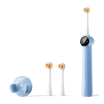
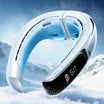
Image: RANVOO.
Why we selected it
The RANVOO AirJet X5 joins this guide as an alternative for readers who prioritize rechargeable operation and less frequent charging. Its replaceable heads allow routine renewal without discarding the handle. Those are useful ownership features, although neither establishes that it has a smaller environmental footprint than the other brushes here.
Battery claims need context. RANVOO’s advertised maximum of 60 days assumes one two-minute session daily. Its detailed specifications give approximately 26–39 days across modes with twice-daily, two-minute brushing. We use the latter figures for comparison because they better match the routine this guide recommends. These are manufacturer figures rather than results from our own testing.
Our inclusion is conditional because sustainability also depends on what happens after everyday use. We did not verify a brush-head take-back program, a user-replaceable battery, or a published battery-service pathway in the materials reviewed. That uncertainty limits its score under this article’s criteria. It does not establish that the product is unreliable; it means we cannot confidently credit those ownership benefits.
We would consider the X5 if its brushing format and charging convenience make it a device you intend to maintain for years. Before purchasing, ask about battery servicing, replacement-head availability, and support after the warranty ends. Choose it for a routine that suits you, while treating environmental superiority as unproven. Longer runtime alone does not demonstrate lower energy consumption or less waste over the product’s life.
Pros & Cons
| Pros | Cons |
|---|---|
| Rechargeable operation avoids regularly buying disposable batteries | User battery replacement and a battery-service pathway were not verified |
| Replaceable heads let owners retain the handle | No brush-head take-back program verified |
| Several weeks of claimed runtime at twice-daily use | Headline 60-day figure assumes brushing only once daily |
| Three heads included | Mixed-material heads should not be assumed recyclable in household collections |
| One-year manufacturer warranty | Higher upfront price; no verified comparative lifecycle assessment |
Key Specs
| Specification | Details |
|---|---|
| Model | AirJet X5 / PH5 |
| Cleaning system | AirJet 2.0 airflow-assisted brushing |
| Modes | Bubble, Sensitive, Clean, Whitening |
| Battery | Built-in 1,600 mAh lithium-ion; 5.92 Wh |
| Claimed runtime | Approximately 26–39 days, depending on mode, at two two-minute sessions daily |
| Charging time | Approximately six hours |
| Charging setup | Wireless charging wall mount; USB-A to USB-C cable |
| Display | 0.79-inch TFT |
| Water-resistance ratings | Handle: IPX7; wall mount: IPX4 |
| Head materials | PP, POM, nylon bristles, and TPE |
| Handle material | ABS with an anti-mold coating |
| Included heads | Three |
| Warranty | One year; “lifetime support” is not a lifetime warranty |
How to Choose
Prioritize the handle’s service options
Find out what happens when the battery deteriorates or the brush stops working. Can you replace a component yourself? Does the manufacturer service the handle? Does it replace the unit and recover the old one?
These are different arrangements. Check the cost, location, and availability of support beyond the warranty period.
Look at the complete brush head
Examine the head body, bristles, insert, and other components separately. “Bamboo” and “plant-based” describe materials; they do not automatically establish how an assembled head should be disposed of.
Favor clear, component-specific instructions over broad claims such as “earth-friendly.”
Confirm that recovery is accessible
A take-back scheme is most useful when it serves your location and accepts your exact product. Check postage, collection requirements, and any subscription conditions.
For local recycling or commercial composting, confirm acceptance with the facility that will actually process the material.
Compare battery claims fairly
Check the brushing frequency, session length, and mode behind each runtime claim. A figure based on one session daily should not be compared directly with one based on two.
Runtime also differs from battery lifespan. Several weeks between charges does not tell you how many years the battery will remain useful or whether it can be replaced.
Keep comfort and technique central
Choose a head you can maneuver around your gumline and back teeth. The ADA recommends soft bristles and gentle pressure. Timing prompts can help maintain a consistent routine, while pressure feedback may be particularly useful if you tend to press hard. Source: ADA toothbrush guidance
Calculate the ongoing cost
Consider:
Purchase price + replacement heads + batteries + shipping + potential service costs
Check refill availability before committing to a less common system. A reusable handle offers limited practical value if you cannot obtain compatible heads.
Choose accessories for an actual need
A travel case can be useful for frequent trips. Additional electronic accessories should solve a specific problem in your routine.
Start with the configuration you will use and maintain, rather than assuming a larger bundle offers better long-term value.
Instructions
How to maintain oral health while avoiding unnecessary waste
-
Brush twice daily for two minutes with fluoride toothpaste. Use soft bristles and gentle pressure, covering outer, inner, and chewing surfaces. Source: ADA brushing guidance
-
Follow the technique for your particular brush. Powered brushes differ in how they should be moved. Follow the manufacturer’s instructions and give every area enough attention. If your brush signals excessive pressure, ease off.
-
Spit out excess toothpaste rather than immediately rinsing with water. This helps retain fluoride on the teeth. Source: ADA advice on rinsing
-
Clean between your teeth daily. Use floss or an appropriate interdental cleaner. Airflow-assisted or microbubble cleaning claims should not be treated as proof that a toothbrush replaces this step. Follow your dental professional’s advice. Source: ADA oral hygiene guidance
-
Rinse the head and let it air-dry upright. Avoid routinely sealing a wet brush inside a travel case. An anti-mold coating does not remove the need for normal cleaning and drying. Source: ADA toothbrush care guidance
-
Replace worn heads promptly. The ADA recommends replacement approximately every three to four months, or sooner if bristles become frayed. Follow any shorter model-specific interval. Keeping a worn head longer is not a useful waste-reduction strategy. Source: ADA replacement guidance
-
Maintain the handle according to its instructions. Follow the specified cleaning and charging practices. Contact support when performance changes rather than immediately buying another brush.
-
Keep brushing frequency independent of battery marketing. For RANVOO AirJet X5, the advertised 60-day figure assumes one daily session. Maintain twice-daily brushing and expect runtime to depend on your mode and usage. Source: RANVOO product FAQ
-
Use the appropriate disposal route. Return heads through an eligible collection program or separate their components as instructed. Take retired electronic handles to a suitable electronics collection service rather than assuming they belong in household recycling.
-
Turn off the tap while brushing. Use water when rinsing the brush instead of leaving it running throughout the session.
Conclusion
SURI Pro 2.0 remains our leading recommendation for buyers who need a new brush and can use its head-return program. Its pressure feedback adds everyday value, although its current replacement-and-recovery service should not be confused with guaranteed lifetime repair.
etee suits people who prioritize bamboo heads and will separate their components properly. Philips One Battery offers an affordable option for accessible battery replacement, with the tradeoff of disposable-battery waste.
RANVOO AirJet X5 adds a rechargeable alternative for buyers who value several weeks between charges. Its convenience may support a lasting daily routine, but stronger repair, recovery, and lifecycle evidence would be needed to recommend it more highly on sustainability grounds.
Choose a toothbrush you can maintain, refill, and keep using. If your existing brush already meets those needs, continuing to use it is a worthwhile choice.
 Best Overall
 Best Value
 Best for Sensitive Teeth


