



















Chewing sugar-free gum after meals can be a small but useful add-on for your mouth. The main benefit is that chewing triggers more saliva (spit), which rinses away leftover food, neutralizes acid, and helps your enamel recover. It is not a replacement for brushing, flossing, fluoride, or dental visits, and the dental benefit is strongest with sugar-free gum—especially xylitol—chewed for about 20 minutes after eating.
Quick rule: choose sugar-free or xylitol gum, chew for about 20 minutes after a meal or snack, and stop if it causes jaw pain, headaches, or stomach trouble.
Why Chewing Gum Affects Your Mouth
The medical word for chewing is mastication, but the simple action is what matters. The gum base—the rubbery part you chew—is not the main hero. The hero is your own spit.
When you chew, your salivary glands pump out more saliva. That extra saliva does three useful jobs:
- It rinses leftover food particles away.
- It neutralizes mouth acid.
- It carries minerals such as calcium and phosphate to the enamel.
Chewing increases stimulated saliva flow, which helps clear the mouth and buffer plaque acid, according to a trial on low-dose xylitol gum. That is why gum can be useful: it is basically a saliva tool, not a medicine.
Sugar-Free vs. Sugary Gum
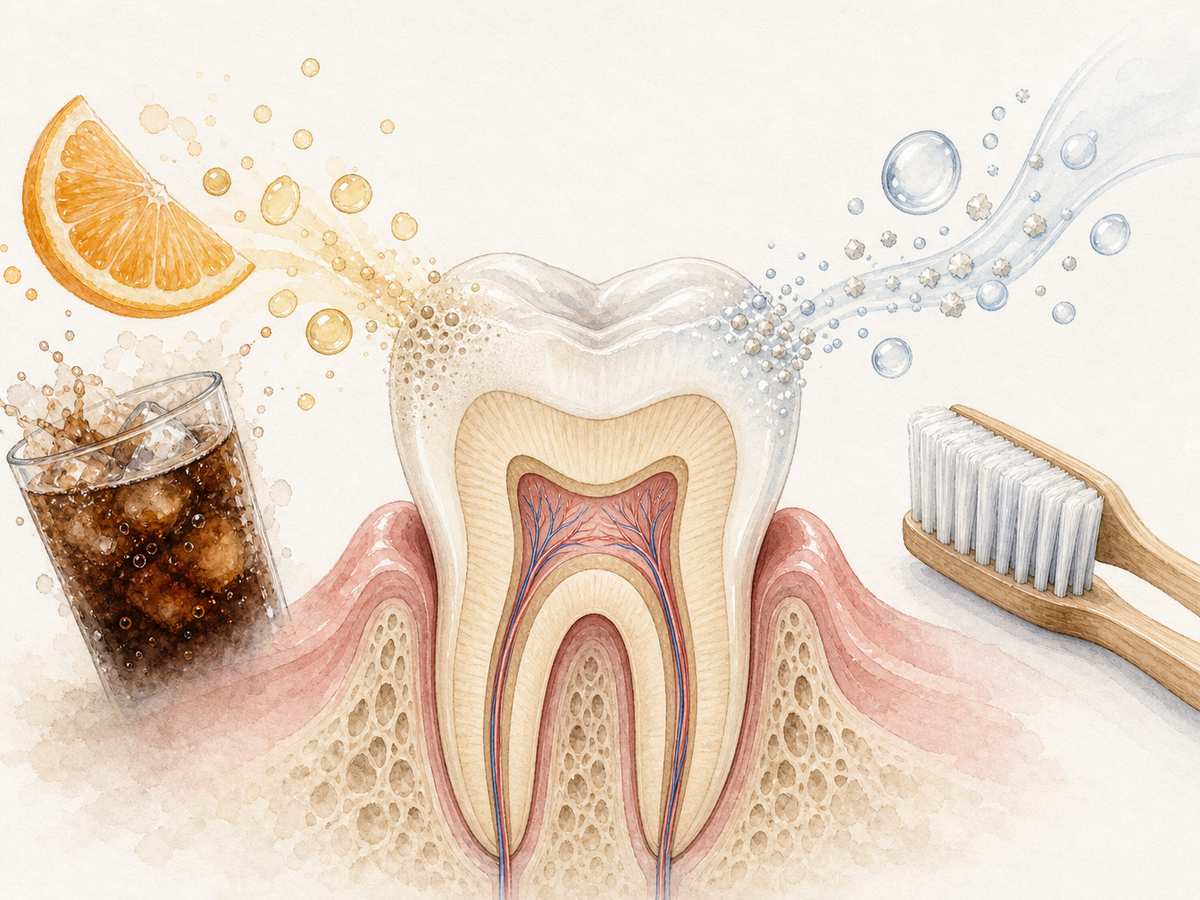
Sugary gum works against you. It contains regular sugar—sucrose, glucose, or corn syrup on the label—which feeds cavity-causing bacteria. Those bacteria make acid, and that acid can wear away enamel and increase tooth decay.
Sugar-free gum avoids that sugar bath. The ingredient label matters more than flavor or brand. Look for “sugar-free” on the front, then flip to the ingredients and check that it does not list sugar, sucrose, glucose, or corn syrup.
Some sugar-free gums use a sweetener called xylitol. Xylitol is a sugar alcohol, a type of low-calorie sweetener, not the kind of alcohol in drinks. Unlike regular sugar, xylitol does not feed cavity-causing bacteria the same way. In fact, a systematic review found that xylitol gum reduced cavity-causing bacteria in 12 of 14 studies when compared with sorbitol gum.
If you have a choice between regular gum and sugar-free gum, sugar-free is the clear pick.
Dental Benefits That Are Well-Supported
Here is what sugar-free gum can reasonably do.
- Reduce plaque acid after meals. After you eat, plaque bacteria make acid. Sugar-free gum triggers extra saliva, which can help the mouth return to a less acidic state. A study in children found that chewing helped plaque acidity recover after a sugar rinse.
- Relieve dry mouth. If your mouth feels dry, chewing can be a quick way to get saliva flowing. This may help carry moisture around the mouth, but it does not fix the underlying cause of dry mouth.
- Manage ordinary bad breath. A dry mouth can make breath smell stale. Extra saliva can help rinse the mouth. But gum will not cure bad breath caused by gum disease, cavities, or other problems.
- Add a little cavity protection when paired with fluoride. A review of sugar-free gum studies estimated about 28% less new decay compared with no gum, and about 33% for xylitol-only gum. The authors called the evidence tentative and mixed. Another meta-analysis concluded that xylitol should be part of an overall strategy to reduce cavities.
The honest version is this: gum helps at the margins. It will not remove hardened tartar, repair a cavity, or clean between teeth. The benefit is greatest when you already use fluoride toothpaste and keep up brushing, flossing, and dental checkups.
Where Gum Stops Being Helpful
Chewing gum is a repetitive activity. If your jaw is not happy, the small benefit is not worth forcing it.
- Jaw pain and jaw joint strain. The jaw joint is called the temporomandibular joint, or TMJ. Some people develop sore jaw muscles or TMJ pain from chewing too much or too long. A review of chewing gum’s adverse effects notes reports of jaw muscle pain and TMJ problems after excessive chewing, especially beyond three hours per day. If you already have clicking, locking, or jaw pain, gum may make it worse.
- Headaches. Jaw strain from constant chewing may contribute to headaches in some people, though the connection is not fully clear.
- Stomach trouble from sugar alcohols. Sugar-free sweeteners such as xylitol, sorbitol, and mannitol are polyols. In large amounts they can cause gas, bloating, or diarrhea. The amount in a few pieces of gum is low for most people, but sensitive stomachs may react, as described in this review on sugar alcohols.
- Braces or aligners. Gum can stick to brackets, wires, and clear aligners, causing discomfort or damage. Ask your orthodontist before using it.
- Sugary gum cancels the benefit. If you chew regular sugary gum, you are feeding cavity-causing bacteria, not helping your teeth.
Occasional 20-minute use is different from constant all-day chewing. The dose and duration matter.
How to Use Gum for Oral Care
If you want to use gum as a low-effort habit, keep it simple:
- Pick sugar-free or xylitol gum. Check the ingredient list for sugar, sucrose, glucose, or corn syrup.
- Chew one piece for about 20 minutes after a meal or snack. The saliva boost is most useful while acid levels are up after eating. Some research found xylitol gum was most effective when used regularly after meals, according to a meta-analysis.
- Stop after about 20 minutes and dispose of the gum properly. Wrap it in paper and put it in a trash can.
- Do not chew all day. All-day chewing can tire the jaw and adds little extra dental benefit.
- Keep normal oral care in place. Brush twice a day with fluoride toothpaste, clean between your teeth daily, and see your dentist regularly.
If you cannot brush after lunch, sugar-free gum is a reasonable backup. On a normal day, it works beside your toothbrush, not instead of it.
Other Health Effects People Ask About
People also ask about appetite, focus, stress, and acid reflux. These effects are possible but not guaranteed, and they are not the main reason to chew gum for dental health.
| Question | What may happen | What is less clear |
|---|---|---|
| Hunger and cravings | Gum may give a minty distraction. | Evidence is mixed, and some people may feel hungrier or have more stomach acid. |
| Focus and alertness | Some people feel more awake while chewing. | Effects are not strong or reliable enough to recommend gum as a focus aid. |
| Stress relief | Chewing may feel calming. | It is not a treatment for anxiety or stress. |
| Acid reflux | Extra saliva may help rinse acid after eating. | Mint gum or swallowed air may worsen symptoms for some people. If reflux is an issue, notice what your body does. |
These side benefits are a bonus, not the main reason to use gum for your mouth.
Who Should Skip It or Ask First
Be cautious or skip gum if you have:
- Jaw joint problems or frequent jaw pain, clicking, or locking.
- Recent dental work or oral surgery.
- Braces or clear aligners.
- Difficulty swallowing.
- Young children, especially toddlers, because of choking risk, as noted in a review on gum safety.
- A sensitive stomach or a history of gas, bloating, or diarrhea from sugar-free foods.
If you are unsure, ask your dentist or doctor. The decision rule is simple: if gum hurts your jaw, causes headaches, upsets your stomach, or makes a medical condition feel worse, stop and check with a professional.
 Best Overall
 Best Value
 Best for Sensitive Teeth
This article has been reviewed by an oral health professional for accuracy. It is intended to provide general educational information and should not be used as a substitute for personalized medical advice, diagnosis, or treatment. If you have questions or concerns about your oral health, please consult a dentist, physician, or other qualified healthcare provider.